

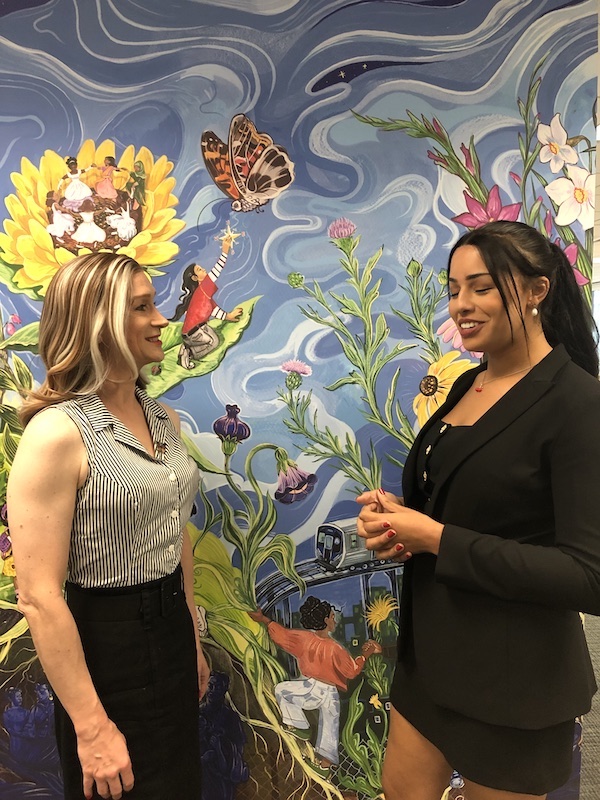
BY CHARLI BATTERSBY | The downtown office building was “Under Construction” when I arrived for a recent assignment. It was an apt metaphor for the recently created City agency I was visiting—the NYC Mayor’s Office of LGBTQIA+ Affairs.
Its mission: To “remove barriers, build belonging, and advance equity for LGBTQIA+ New Yorkers” by focusing on “ensuring LGBTQIA+ communities, especially Black, Indigenous, and People of Color (BIPOC) and transgender, gender non-conforming, and non-binary (TGNCNB) individuals, can access affirming services, thrive in their communities, and live safely and openly in every part of our city.”
Although the Office is new, Inaugural Director Taylor Brown is not a newcomer to its work. With her March 13, 2026 appointment by Mayor Zohran Mamdani, Brown became the first trans person to head a NYC City agency—the latest in a series of similar distinctions. A first-generation graduate of the University of North Carolina at Chapel Hill and the Benjamin N. Cardozo School of Law, Brown was the first bi-racial black transgender woman hired as a staff attorney at the Lambda Legal Defense and Education Fund (Lambda Legal); was the first transgender woman hired as a staff attorney at ACLU National; and, most recently, was the first transgender woman hired as an Assistant Attorney General. Upon her 2024 arrival at the New York State Office of the Attorney General (under Leticia James), Brown worked at the AG’s Civil Rights Bureau—where, she recalls, “My practice was focused on racial justice issues and dealing with the Trump administration’s various attacks on Racial Justice and DEI and, other naughty words that this Administration has defined.”
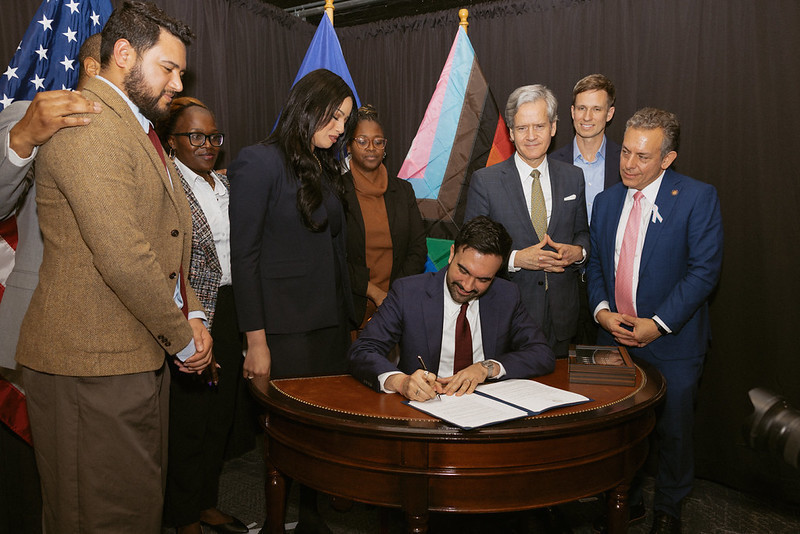
We asked about the similarities between Brown’s work on racial justice and, while with the AG, her work on trans matters. Brown told us, “I always say when I talk about my work, I’m a trans woman, I’m a biracial woman, I’m from the South… My life has been at the intersection of these kinds of issues. When you look at the LGBTQIA civil rights movement and how we litigate these cases, it has really been on the back of the African American civil rights movement, and the pieces of legislation that were enacted to protect African Americans. When you think about Title VI, Title VII; when you’re talking about even Title IX, to an extent the Fair Housing Act—major LGBTQIA cases were litigated under very similar Constitutional theories, or statutory protections that were enacted to protect black people. Arguably, I would say that [LGBTQIA] as a movement have had more success, at least in coming to legal equality under the statutes, than we’ve seen in terms of reducing the racial disparities that they were enacted to address.”
But she was very quickly brought back to trans law. Earlier this year, LGBTQ Community News covered a 2024 Executive Order in Nassau County that would effectively ban transgender athletes from practicing or competing at NYS-owned parks or properties. Brown was the natural choice to represent the NYS AG. “I came to the Attorney General’s office because I had spent all of my career focused on LGBTQIA issues,” Brown noted, “and I wanted to do other civil rights work, primarily in the Racial Justice space. As soon as I came in, that exact Executive Order got teed up. First it was an Executive Order by [Nassau County Executive Director] Bruce Blakeman, and then it was a piece of legislation. I led our litigation at the Attorney General’s office against that piece of legislation, so we had a companion case with NYCLU, who represents the Long Island Roller Rebels.”
Throughout our interview, Brown spoke—practically and strategically—like a lawyer, making precise citations of legal concepts, and avoided rhetoric. Regarding the Nassau County matter, she told us, “From our position, at least the Attorney General’s position, it’s a very straightforward legal situation under the New York State Constitution. Localities, counties, towns—what have you—are basically extensions of the state, and what that means is that they [localities and municipalities] are not allowed to add laws that conflict with State laws. And here we have very robust State protections on a constitutional and statutory level that prohibit that sort of discrimination.”

Our reporter pointed out that Nassau County argued that trans people could just have their own leagues under the legislation, and that the law allowed trans women to play on co-ed or male teams.
Brown responded with, “Exactly. That was the effect of the legislation, so it only targets trans women and trans girls. When you look at the actual language of the legislation, it only impacts trans women and trans girls, so trans boys are free to play on men’s teams, they are free to play on women’s teams, or coed teams—and the same, technically, for cis-men, and cis-women. That is what we call a ‘Hobson’s Choice’ [a free choice in which only one thing is actually offered, meaning a situation with no actual alternative at all].”
The case is still making its way through the system. But Brown added, “It’s harmful. It’s not rooted in reality. It’s not rooted in science… If you look at the record of that case, they have no record of even any trans athletes in Nassau County. They have no record of any cis-gender athletes being harmed by trans women. This is just a tactic based on politics, really, to target very vulnerable people, and to address a problem that was not there.”
Our reporter asked about identities on the QIANB/GNC+ end of the LGBT spectrum, and how the law defines gender and sex in 2026. Brown noted that New York’s laws about gender and sex-based protections, “are rooted in the concept of gender identity, and those are baked into our laws textually and through regulations that have been enacted on the State and City level. In the New York State Civil Rights law, and the New York State Human Rights law, and the City Human Rights law, both levels recognize an X marker for non-binary individuals. That has to be provided on identity documents from birth certificates to State licenses to State IDs. Also, with our [New York] City ID, there is an X gender marker, as well our laws, to recognize non-binary status—and it’s protected from discrimination along the same lines as it is for trans people.”
We asked about the conflicts between New York State’s definitions of gender, and the Trump-orchestrated Federal position that there are only two genders (the presence or absence of a Y chromosome being the only objective factor). “It depends on what context that arises,” responded Brown. “And obviously, we’ve seen that argument being made in the most recent Title IX cases that came out of the Supreme Court when they were looking at sex.”
Brown explained the basics of “conflict preemption,” noting, “Federal law is supreme in this country under the supremacy clause in the Constitution… I think we’re seeing that come up. I believe there’s still passport litigation going on. The new Trump Administration came in and decided to remove the X marker. This invokes something called ‘State Rights Doctrine.’ States are separate sovereigns in our system and have a lot of powers granted to them both expressly and implicitly in the Constitution. So the state is, in general, responsible for the welfare of its people.”
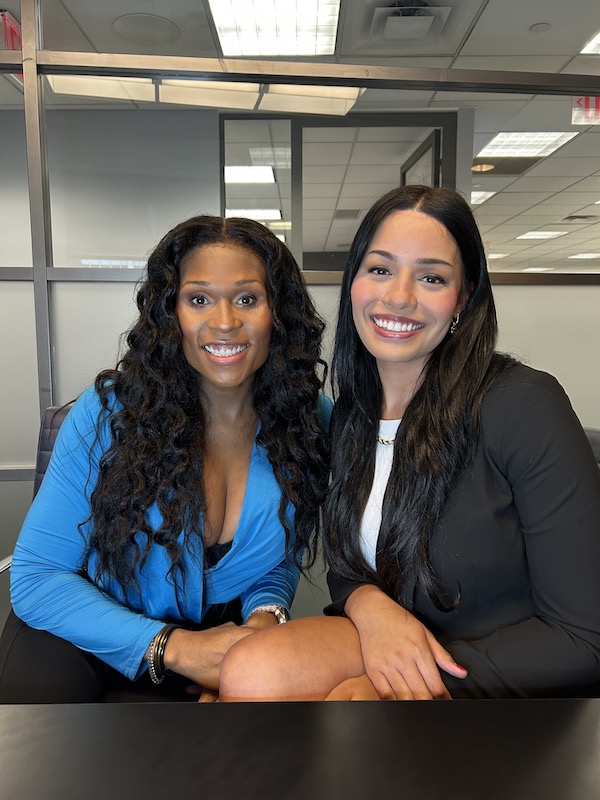
On the topic of the newly created agency’s authority—specifically if a transgender person has already asked for help from other agencies like the Commission on Human Rights, or used a civil law suit—Brown told us that the Mayor’s Office of LGBTQIA+ Affairs is not “a law enforcement agency. Our authority and power is set out in our Executive Order 14 of 2026. There’s a variety of avenues they can pursue through the New York City Commission on Human Rights [and] they can pursue a claim through the New York State division of Human Rights.” She paused, then added, “Technically, the Federal Equal Employment Opportunity Commission. I can’t give legal advice but look at the state of that.”
(The current Chair of the EEOC, Andrea R. Lucas, includes the following in her bio at the EEOC website: “defending the biological and binary reality of sex and related rights, including women’s rights to single-sex spaces…”)
Brown explained that her office is “tasked with making sure all city agencies—that’s over 100 agencies—are not discriminating against LGBTQIA people. We do that work through policy audits… Through policy recommendations, we can support legislation on a City or State level. I’m also empowered to recommend executive orders and other policy decisions to the mayor.”
She also explained that the law prohibits quotas when dealing with diversity issues, even extreme cases where large organizations have no openly transgender employees. She said, “There can never be a situation where we’re saying you have to have a proportionate number of trans people as related to the New York City population, or the federal population. Again, New York City on the whole is obligated to comply with the Equal Employment Opportunity laws. On the City and State level, we have very robust employment opportunity laws.”
Our reporter asked about New York State laws that protect gender identity, and if they can go too far. In particular, people who are concerned that they’ll be fired from their job if they don’t acknowledge genders that they earnestly don’t believe exist.
Brown told us, “It depends on the context—that’s such a lawyer response,” she laughed, then went on to say, “In general, gender identity has to be respected in New York State. [Civil Rights Law Section 67] expressly states that a court order is not required for a person’s gender identity to be respected throughout the state of New York. You have to respect someone’s gender identity once they tell you.”
She elaborated, noting, “We all have a gender identity, we all have pronouns, we all have a name. It’s really just courtesy. And, of course, if someone has an objection that’s potentially against their sincerely-held religious beliefs, that’s something that employers have to weigh. But, in general, these are neutral laws that apply to everyone, so it’s not technically an infringement on someone’s religious rights to comply with our State civil rights laws.”
We asked about specific policy proposals, but the office isn’t free to disclose these yet. Brown did tell us, “Obviously a lot of the work that we’re doing right now is centered on transgender issues, because that’s what’s happening in this country since this Administration took over. But we are an office that’s accountable to our entire Community, and is looking at the broad spectrum of issues.”
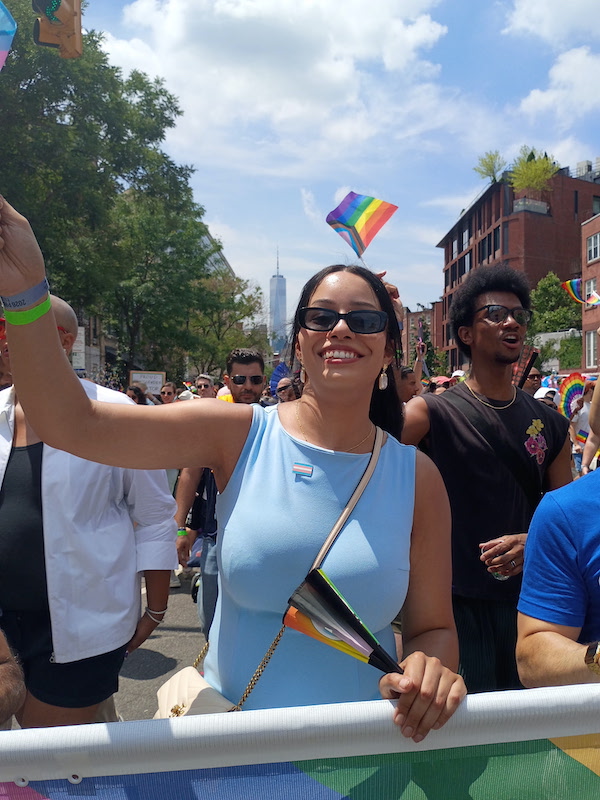
The office was announced two weeks before Transgender Day of Visibility (TDoV), and Brown began work two months before Pride month in June. The office wasn’t up and running in time for TDoV, but Brown attended numerous Pride events. Our reporter was surprised to learn that, “I have never been to a Pride parade before [this year]. I’ve always been someone who’s consumed with the work.”
Our reporter jokingly interjected, “You’re on the record saying that!”
Brown responded, “It’s not a bad thing for me. It’s something we have to realize—our community is not a monolith. We don ‘t show up in the same spaces in the same ways. I’m also from the South so it’s not something I really experienced growing up, and I’m just an incredibly busy woman, so work takes so much out of me. I’m very low-key.”
Brown continued, “Pride was just amazing. The Mayor’s Pride event was, I believe, the biggest one in history—almost five hundred people. I was new to the Office, and we were at the end of the fiscal year, so we didn’t have a lot of money to work with to host our own event, so I made it a priority to be at as many events as I could in June.”
Shifting the discussion away from transgender issues, our reporter asked about gay women, and bisexuals—groups that sometimes receive less attention from LGBT affairs.
Brown told us, “Our work in terms of the anti-discrimination front, is to make sure all people are aware of their protections under City law. A lot of people just don’t know their rights and that’s a really big problem, because it’s ultimately up to individuals to enforce their rights. I have been the biggest enforcer of my civil rights. I accomplished so much for my own civil rights before I even became an attorney, when I was an undergrad when I was in law school in my employment, and challenging employment policies that were discriminatory. I think that is critical.”
She also added that the office will have five Town Halls in this inaugural year, to speak to the community. These will happen around the boroughs. The first is being scheduled for mid-October.
We circled back to trans issues, and the incredibly divisive issue of medical transition for minors. Brown told us, “It is another issue, unfortunately, that has been politicized, that should not have… Obviously, all care related to youth is sensitive. These are highly personal, individual-wise, decisions. Even from my own experience, I came out when I was 18. I would have come out much earlier if I could have, but I lived in rural North Carolina and there were just no options for those things.”
Brown continued, “It is incredibly sad to me, where we’re at in this country on a lot of these issues, but especially for trans kids… New York is the epicenter of that. We will continue to monitor Federal attacks. The mayor has announced a $15 million dollar fund to ensure that gender affirming care can still be provided to minors, and their care isn’t interrupted because of these ridiculous Federal actions.”
Brown added, “At the end of the day it’s about autonomy, humanity, and compassion. And people’s choices. This is surely something that is best left to the individuals, and for minors, their parents, and experts.”
We asked about her Office’s plans for Transgender Day of Remembrance in November, and Brown told us, “I don’t know if we have any concrete plans. Right now, we’re a two-person team. We have a lot of work to do, especially on the legal and policy side, so I have to make that kind of call.”
She joked, “Event planning is not the background that I come from. I think it’s hard for people to believe that I’m an introverted person. I’m very low-key outside of work.”
Our reporter commented that, yes, Brown comes across as very extroverted.
She replied, “I’m usually at home. I give a lot to my work. I think that’s what’s required of this work, especially in a leadership position. For me, I require a lot of downtime, and I tend to be very introverted. We will certainly be celebrating [TDoR] either through something this office will do, or something with our community-based partners, which I actually prefer. That’s where we need to be—as a community.”
Brown compared the new office to a Silicon Valley startup. At the moment, the team is Brown, and Alicia Miranda, the Senior Programs Manager who is handling Grants and Programming. They’re still filling positions (interested applicants can apply at nycjobs.gov). She explained about the difficulties of hiring, “When you get to senior levels—these aren’t entry-level jobs—you have to get it right. We have a very big mandate, we have a very big mission, and we have a lot of people counting on us. So I would rather it take time, versus it not working out.” That said, “We’re working as hard as we can to operationalize to get ourselves up administratively. It’s certainly taking more time than I would like, and I hear that, and we truly are setting ourselves up to be well-positioned.”
Our reporter asked about the future of the agency. A new mayor will eventually take office in four to eight years. Brown explained that the Office was created by an Executive Order, and is technically housed within the Mayor’s Office of Equity and Social Justice.
“I’m a political appointee. So I serve at the pleasure of the mayor—so I can be terminated by the mayor,” Brown noted. “And then, of course, the elections usually result in changes of leadership across agencies. I know I’m here for at least another three years, so that is my focus. And doing all the work we can, and making sure that work is lasting work in a big way. So that’s my priority.”
ABOUT The Mayor’s Office of LGBTQIA+ Affairs
Mission: The mission of the Mayor’s Office of LGBTQIA+ Affairs is to remove barriers, build belonging, and advance equity for LGBTQIA+ New Yorkers. We focus on ensuring LGBTQIA+ communities, especially Black, Indigenous, and People of Color (BIPOC) and transgender, gender non-conforming, and non-binary (TGNCNB) individuals, can access affirming services, thrive in their communities, and live safely and openly in every part of our city.
Vision: Our vision is a New York City where every LGBTQIA+ New Yorker can live a healthy, empowered, and fulfilling life, free from discrimination and able to celebrate their identity with both pride and safety.
Taylor Brown (she /her) was appointed as the Inaugural Director of the NYC Mayor’s Office of LGBTQIA+ Affairs by Mayor Zohran Mamdani on March 13, 2026. Taylor’s office works to advance the Mamdani Administration’s platform for LGBTQIA+ issues across New York City government to improve the lives of all queer New Yorkers. Taylor’s appointment marked her as the first openly transgender person to lead a New York City office or agency and the highest-ranking transgender person in New York City government.
Before being appointed to lead the NYC Mayor’s Office of LGBTQIA+ Affairs, Taylor served as an Assistant Attorney General in the Civil Rights Bureau of the Office of the New York State Attorney General, Letitia A. James. Taylor’s work in the CRB involved the enforcement of Federal and New York State constitutional and statutory civil rights laws and protections, through investigations and affirmative and defensive litigations. Taylor’s portfolio included investigations and litigations concerning unlawful and discriminatory policing patterns and practices; unlawful discrimination against transgender women and girls in places of public accommodations and housing; unlawful race and disability-based discipline disparities in public schools; challenging deceptive and false advertising practices concerning abortion pill reversal; and combatting the Trump Administration’s attacks on racial justice, civil rights, and democracy.
Taylor has specific interest and expertise in constitutional law, civil rights, racial justice, LGBTQ+ rights, healthcare, and civil litigation. Prior to joining the NYOAG, Taylor spent almost 7.5 years at Lambda Legal Defense & Education Fund and the national office of the American Civil Liberties Union’s LGBTQ+ & HIV Project. At Lambda Legal and the ACLU, Taylor led impact litigations nationwide advancing the constitutional and statutory civil rights protections for transgender people, with a focus on healthcare equity and access, prisoner rights, education, and employment. Taylor was lead counsel in several high-profile LGBTQ+ civil rights litigations, including Thomas, et al. v. Georgia Dep’t of Community Health, et al. (removing the exclusion of gender-affirming surgical care in the State of Georgia’s Medicaid plan); Iglesias v. Federal Bureau of Prisons (requiring the recission of the Trump Transgender Offender manual and marking the first time a federal district court ordered the BOP to provider multiple gender affirming surgeries for an incarcerated transgender woman); Hersom v. Crouch (requiring the State of West Virginia to safely and accurately issue name and gender marker birth certificate amendments to transgender West Virginians); Poe v. Labrador (challenging the state of Idaho’s ban on gender affirming care for minors); L.E. v. Lee (challenging the state of Tennessee’s ban on transgender students participating in public school athletics consistent with their gender identity); Bridge v. Oklahoma (challenging the state of Oklahoma’s ban on transgender K-12 public school students and staff utilizing restrooms and locker rooms consistent with their gender identity); Kadel, et al. v. Folwell, et al. and Fletcher v. State of Alaska (litigations removing gender affirming healthcare exclusions in the state employee health plans of North Carolina and Alaska); and Briteramos v. Kings of Cuts (successfully challenging a barbershop’s denial of service to a person living with HIV based on their HIV status).
Taylor is the first transgender woman hired as an Assistant Attorney General at the NYS OAG; the first transgender woman hired as a staff attorney at ACLU National; and the first bi-racial black transgender woman hired as a staff attorney at Lambda Legal. Outside of her work responsibilities, Taylor serves as Co-Chair of the New York Lawyers’ Chapter of the American Constitution Society. Taylor has won numerous awards and recognition for her advocacy and is a nationally featured public speaker. She has given over 80 presentations to law schools, businesses, governmental bodies, professional conferences, and other entities. Taylor is a first-generation graduate of the University of North Carolina at Chapel Hill and the Benjamin N. Cardozo School of Law.
Alicia Miranda (she/her) serves at the NYC Unity Project, bringing over a decade of experience in city government and community-based work focused on equity, access, and inclusion. Throughout her career, Alicia has developed and managed programs, built cross-agency partnerships, and helped New Yorkers navigate systems to get connected with the resources and care they need. Holding her LMSW, Alicia is passionate about mental health, youth development, and creating spaces where people of all identities feel welcomed and supported. A proud Queer Nuyorican and graduate of CUNY, she holds a BA in Political Science from John Jay College and an MSW from Hunter College with a concentration in Community Organizing, Planning, and Development. She is dedicated to ensuring that LGBTQ+ and TGNCNB New Yorkers can stay healthy, feel a sense of belonging in their communities, and connect to opportunities with the support they need to thrive.
—END—
LGBTQCommunityNews.nyc is an independent, free source of queer-centric news, arts, info, and opinion content. Our website, podcast, and quarterly newspaper are funded by advertising revenue and reader donations. To support this project, click here for the GoFundMe campaign. Questions? Comments? Click here to contact us. To join the subscriber list of our free ENewsletter, click here.