

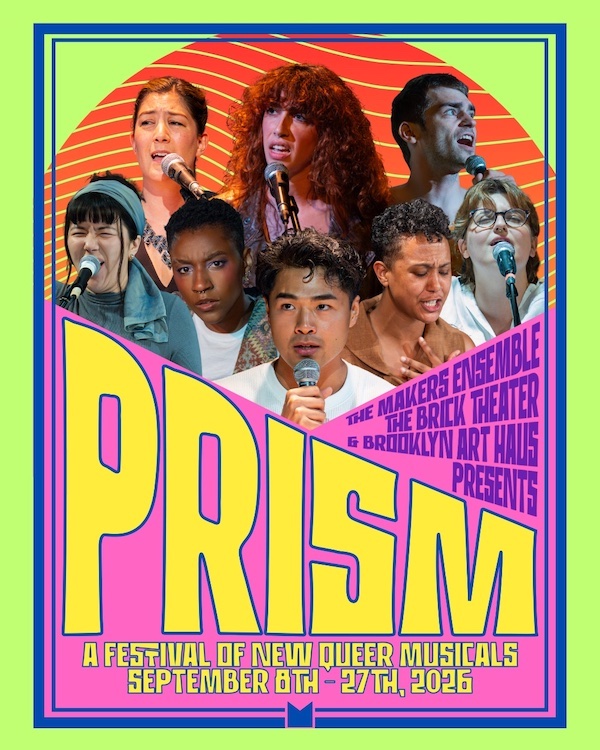
PRISM: A Festival of New Queer Musicals
Produced by The Makers’ Ensemble in partnership with The Brick Theater & Brooklyn Art Haus
September 8-27, 2026 at The Brick Theater (579 Metropolitan Ave. / Brooklyn, NY; By Subway: Take the L to Lorimer or G to Metropolitan)
For Tickets ($25-50), Click Here
 BY SCOTT STIFFLER | Ah, the theater—where an ocean gets its motion from moving rows of cardboard waves; that distant mountaintop is just the stuff of spray paint and forced perspective. Add to this reality-defying artifice the sudden infusion of song and dance backed by live music. But with a little “suspension of disbelief,’ intrepid theatergoers can find themselves immersed in spirited singing and ensemble choreography. pairs exceedingly well with plot, theme, and performance.
Case in point is PRISM: A Festival of New Queer Musicals—a collective effort from The Makers’ Ensemble, The Brick Theater, Brooklyn Art Haus, and Judson [Memorial Church] Arts. Now playing through September 27 on two Brooklyn stages, PRISM provides the rehearsal and performance spaces, resources, and support necessary for project creators and their collaborators to deepen and refine projects on a path toward full productions.
Audience engagement (to say nothing of future bragging rights) is also a core component of the Festival’s appeal, notes PRISM co-founder Dante Green (they/she/he), who says that beyond providing “insight into the process of how a musical is made,” PRISM is a rare opportunity for audiences “to see something in its infancy; something you’re going to see again, that’s going to come back in a brighter, fuller way.”
The works-in-progress format sees shows arrive at PRISM in various stages of development, and styles of presentation. Notes Green, “Some choose to do a semi-staged presentation, some are table readings, and some are a sneak peek at one act only… We ask them [show creators] what it is they’re looking for, developmentally [and build their time with PRISM around that].”
Green added that their curation of content for PRISM is done in conjunction with leadership from The Makers’ Ensemble,” a resident ensemble for which Green serves as Co-Artistic Director. Many “multi=hyphenated” Makers’ members appear on stage and behind the scenes of the annual PRISM Festival, whose flagship presenting house for 2026 is The Brick Theater (where Green recently accepted the position of Co-Director).
NOTE: Below, find info on the three 2026 PRISM participants whose run had not yet concluded as of this article’s September 20 publication. Following that, find our interviews with core members of the creative team from two PRISM participants who, by Sept. 20, had come and gone—but they’re not forgotten!
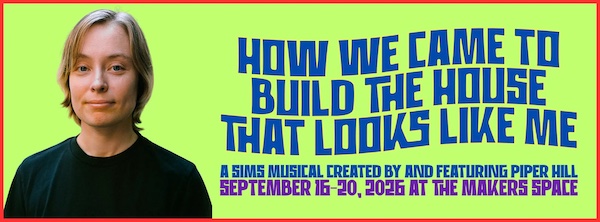
How We Came to Build The House That Looks Like Me | This one’s being promoted in PRISM press material as “The SIMS Musical.” At only three words in length, this pithy promo line has the right stuff to serve as the show’s intriguing calling card. (You could say it several times, and still have leftover space for your elevator pitch.) But wait–there’s more. We’re told the show “tells the story of the guys that live inside of… a very trans and very silly brain… with visuals animated using The Sims 3 & 4.” Directed by Emlyn Doolittle, Music Directed by Piper Hill. / Performances on Sept. 16, 17, 19, 20. More info here.
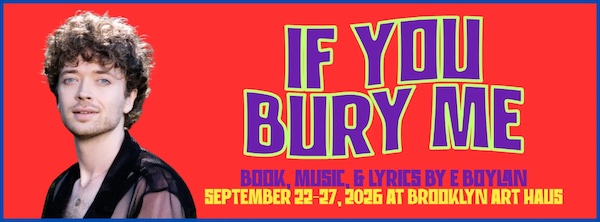
if you bury me | An empty coffin’s sudden materialization in the basement of a small-town parish; the disappearance of “the woman who claimed to know everything; and the emergence of a secret underground society determined to investigate. And that’s just the premise! This “fantasy for queer imaginations” sees the Society’s mystic storytellers using shards of insight from past and present, to “learn what grows from the dead and what begins in the end.” Directed by Dante Green, Music Directed by Sofia Geck. Performances on Sept. 22, 24, 26, 27. More info here.
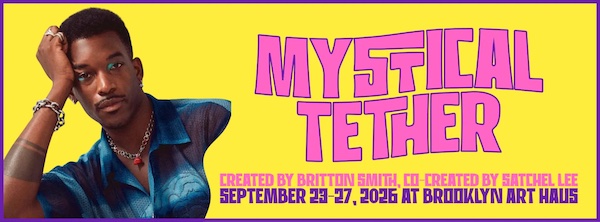
Mystical Tether | Audiences are invited “into the early evolution of a work honoring the sacred ties that shape who we become. Presented as an “in-development concert experience,” this PRISM run offers a “first look into an emerging theatrical song cycle about the spiritual and ancestral bond between a Black queer man and his grandmother.” The grandmother’s transition compels the grandson to impart upon “an ancestral journey that carries him back to the American South in 1948,” where his mission soon becomes clear: Bring his family’s secrets into the light, and break the cycle of shame. Directed by Miranda Haymon; developed with filmmaker Satchel Lee; led by Britton Smith and three musicians. Performances on Sept. 23, 25, 26, 27. More info here.
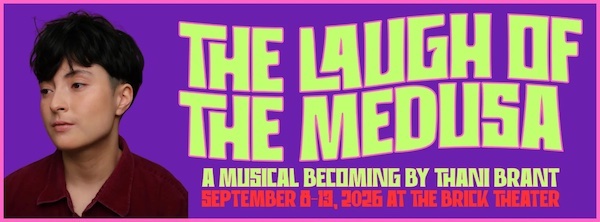
THE LAUGH OF THE MEDUSA
By Thani Brant
Directed by Megumi Nakamura
Music Directed by Déa Thatcher
This “trans coming-of-age musical” sees the prayers of a young writer and the mythical Medusa exerting a collective power sufficient to fray “the veil that separates space and time.” Their common goal: Break from cycles of violence, to live authentically in freedom and safety.
In an interview prior to the show’s September 8-12 PRISM run, writer/creator Thani Brant (Brant) discussed its folk music influences, first heard and felt while growing up in Fresno, CA. Although this 2025 report hails it as the “Raisin Capital of the World,” the town has never been known as a hotbed of folk music activity. Be that as it may, Brant, the child of “music aficionados,” says works by Joni Mitchell and Bob Dylan were among “the first songs I recall hearing.”
As such, that storytelling, advocacy-minded genre—in which matters of independence and integrity are often front-and-center—has emerged as the style of choice for the show’s songwriting protagonist.
Regarding the narrative, Brant traced its inspiration to a college-era Lit class reading of the 1975 essay Le Rire de la Méduse (The Laugh of the Medusa), by French feminist Helene Cixous. “It’s about women’s writing, and the task women have of writing themselves into history.” As such, Brant (who identifies “a non-binary transmasculine person”) notes The Laugh of the Medusa finds its two main characters—Medusa, of Greek myth, and a songwriter living in contemporary times—”writing their own histories by asking the universe to bring them closer to who they deeply feel themselves to be… The essay is about women’s writing. My show is ultimately about trans writing. So yes, this [semi-autogiographical] songwriter character, over the course of the story, they have to find a way back to authenticity in their writing.”
“Ultimately,” says Brant, “as much as it is a coming of age story of this person [the contemporary era’s songwriter], it’s also a story about the violence that has historically faced trans people, and is still being faced today.” Brant sees that propensity for violence as “deeply connected to white supremist Christianity… There are societies where queer people are, and have been, revered and integrated as a major part of how these societies function—and that has just been stamped out of the society we live in.”
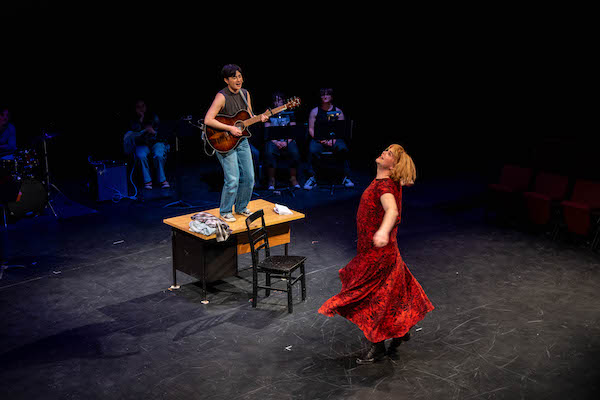
During a part of our interview that concerned ways in which to see present attitudes evolve, Brant linked its best hopes to winning over hearts and minds—a “lightswitch” moment when a deeply held beliefs undergo sudden and lasting change. Portraying that internal process is a heavy lift, which is where the musical element comes in.
“There have been studies that show music is a gateway to empathy” says Brant, noting that songs can serve as a catalyst for audiences to “open their hearts and discover something more” than what “words alone can convey… There is a song that is sort of the [thematic] climax of the show, the second to last one,” notes Brant, “It captures that instant in which Persius sees something different [in Medusa]; sees the human connection, the truth that we are all alone.” Thus, the lightswitch is pulled by Persius’ realization that, “The ideas that have been given to him about the danger and wrongness of this person.”
Directly below is an excerpt of the lyrics from the show’s penultimate song, No Danger. Demos for a few songs—including No Danger—can be found here.
WHEN SHE LOOKS AT ME
I SEE MYSELF REFLECTED IN HER EYES.
WHEN SHE LOOKS AT ME
I SEE HER CLEARLY — SOMEONE THAT I RECOGNIZE.
NOTHING LIKE THE VILLAIN
HE TOLD ME I WOULD MEET.
NOTHING LIKE THE MONSTERS
I HIDE FROM UNDERNEATH MY SHEETS.
NOTHING LIKE THE PREDATOR
I HAD INSIDE MY HEAD.
BUT SOMEONE BEAUTIFUL INSTEAD.
Reached for comment just after the conclusion of the show’s PRISM run, Brant called festival participation “a whirlwind for our company… The response was overwhelmingly positive, with audience members describing the show as ‘euphoric,’ ‘powerful,’ and ‘brilliant,’ Our team is looking forward to recording an EP of songs from the show in the coming months, and we have high hopes for a full production sometime soon.”
Following each performance, post-show audiences “had the opportunity to read testimony from trans people inside ICE detentions across the country and contribute to the Trans & Queer Community Fund, a mutual aid collective that collects and distributes funds to trans and queer people impacted and incarcerated by ICE,” noted Brant. “This allowed audiences to connect the message of the show—to the real dehumanization and transphobia plaguing our world today, and the power we have to make an impact together.”
Over the course of the run, recalled Brant, “Our company grew to include Micki Hardenberg and Aris Kirby, who stepped in to cover roles. while B Noel Thomas stepped into the role of Medusa for two of our four performances. If it proved anything to me, it’s that there is a great wealth of exceptionally talented, intelligent, hardworking trans actors in this city. Yet, trans people are still vastly underrepresented and underemployed in the theatre industry at large. This needs to change, and I think our audiences would agree.”
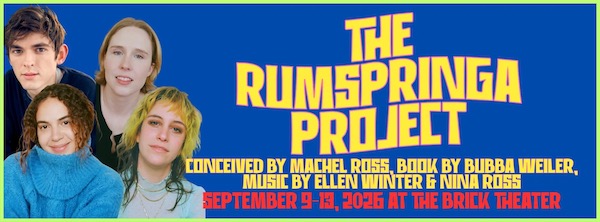
THE RUMSPRINGA PROJECT
Conceived & Directed by Machel Ross
Music & Lyrics by Nina Ross and Ellen Winter
Book by Bubba Weiler
Additional collaboration from Sekai Abeni and Tony Nominee Ellenore Scott; developed at Mercury Store, Berkeley Rep Ground Floor, and through the Joe’s Pub Working Group.
Described as a “music-theatre kaleidoscope,” this queer coming-of-age story takes its inspiration from the Amish rite-of-passage known as Rumspringa. Also known as “jumping the fence,” it’s the time in life when Amish on the threshold of adulthood are sent into the larger world to experience its unfamiliar offerings. It culminates in participants choosing to rejoin their Amish community or remain in the secular sphere, never to return.
Interviewed prior to the show’s September 9-13 PRISM run were Machel Ross (who conceived and directed) and Ellen Winter (who, along with Nina Ross, wrote music/lyrics). Ross called this PRISM run “an interesting transformative stage” in the narrative’s evolution. Previous iterations have been rooted heavily “in the [Amish] observations and implications of Rumspringa… Over the past 18 months, there has been a concerted effort to use that as a jumping off point, to parallel ways queer young people are coming into the fullness of who they are.”
Noted Ross of the music’s current state, “What we are sonically stepping into is very rooted in contemporary [music], with folk tonality to it…When I was first imagining the show, the image I had was of my dear friend, Bubba, in the middle of a cornfield with a pedal and a microphone.” Since then, “We have really leaned into embracing electronic equipment, and that creates a stylistic choice.”
Winter noted musical echoes of work by “Belinda Carlise, a lot of storytelling–but we’re not afraid of a sample and loops” to tell a very ‘90s-stamped story that zooms in on “a couple of friends who live somewhere in Middle America, who are realizing themselves as teenagers at a place and time where they don’t necessarily have outright explicit access to a queer community.” Winter also noted a narrative tonality influenced by source material including “the [2012] documentary Breaking Amish—so intense.” Ross also cites as influential, Devil’s Playground (2002). “There are some really haunting images in that documentary… a group of teenagers raging in the woods; a vivid aliveness and honesty…”
In that manner, the “Rumspringa” of these decidedly non-Amish characters is approached by the creative team as an ongoing act of becoming—not simply a fence to jump and never look back upon. In fact, says Winter, the queer experience goes far beyond one watershed moment, encompassing “a lifetime of digging deeper and discovering new things. I feel like I’ve come out five times in my life, in various ways, only to do that work again.” Far from being a burden, Winter regards life’s occasional acts of self-examination, often compelled by circumstance, “a gift we get, as queer people. For us to ‘jump the fence,’ there are so many leaps—but if you listen to that inner voice, your life is going to be full of surprises, full of Rumspringas.”
###
—ABOUT (in their own words)—
The Makers’ Ensemble is a Brooklyn-based resident ensemble of multi-hyphenates. We create and cultivate Live Arts. We celebrate and value the differences in our cultural, educational, social, and identity backgrounds. We provide programming and support for emerging artists to realize their creative dreams in collaboration with the resident ensemble. It’s important to us that the rooms we create are diverse, the work that we make excites us, and the collaboration we build is balanced. We use communal live arts to inspire the next generation of artists and audiences, ignite new passions, foster new relationships, and reimagine the future of Ensemble Practice.
The Brick Theater is a not-for-profit dedicated to developing and presenting the work of pioneering emerging artists and career experimenters in Williamsburg, Brooklyn. We are the artistic home for work that pushes boundaries and spans the ever-evolving spectrum of performing arts, theatre, dance, video, virtual reality, and visual arts. By nurturing emerging artists, sustaining ongoing relationships with frequent collaborators, and removing financial barriers for artists to create work, we create a diverse, accessible, and inclusive artistic community for the city’s most daring artists. We welcome adventurous audiences with low-cost and sliding-scale ticket prices to make performances accessible to all.
—END—
LGBTQCommunityNews.nyc is an independent, free source of queer-centric news, arts, info, and opinion content. Our website, podcast, and quarterly newspaper are funded by advertising revenue and reader donations. To support this project, click here for the GoFundMe campaign. Questions? Comments? Click here to contact us. To join the subscriber list of our free ENewsletter, click here.