


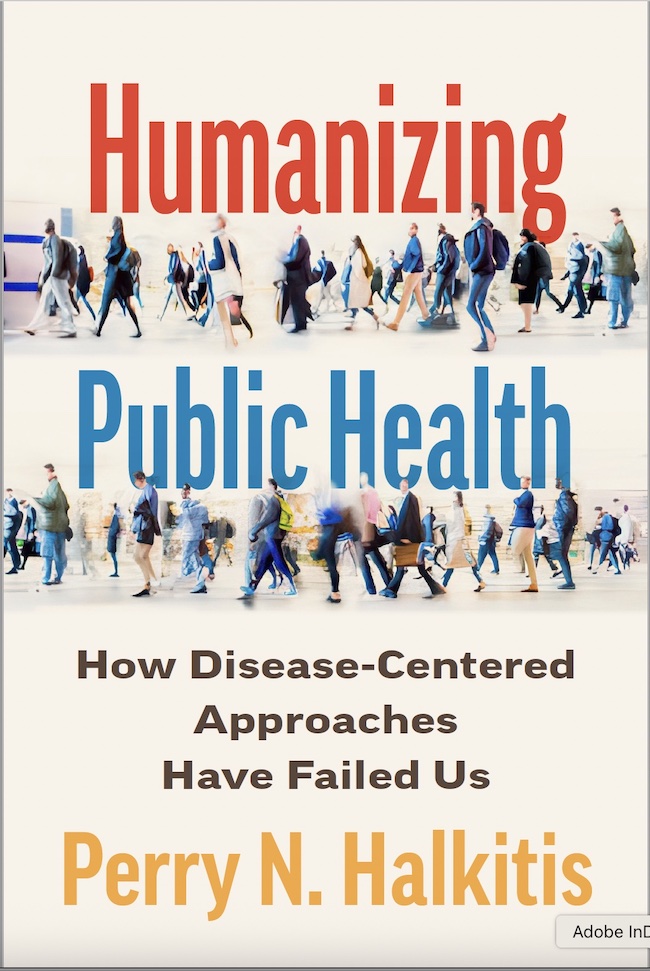
Whether knee-deep in the trenches or perched on high for an aerial view, Perry N. Halkitis (PhD, MS, MPH; he, him, his) excels at assessing current efforts and mapping forward-thinking strategies. Those uncanny knacks have a robust presence throughout his authorship of over 300 peer-reviewed academic articles and six books (including 2013’s The AIDS Generation: Stories of Survival and Resilience and 2019’s Out in Time: The Public Lives of Gay Men from Stonewall to the Queer Generation). His latest tome—2026’s Humanizing Public Health: How Disease-Centered Approaches Have Failed Us—is out now, so to speak, in paperback and ebook formats, from Johns Hopkins University Press.
A series of email exchanges yielded the below Q&A, in which Halkitis insists effective medical treatment must be delivered alongside high regard for the human condition. He also discusses the writing process, with sidebar shoutouts to Kate Bush and a certain Sugarbaker sister. (Note: Halkitis is a longtime content contributor to publications edited and/or owned by this website’s founder.)
 Scott Stiffler, for LGBTQCommunityNews.nyc (LGBTQCommunityNews): When did the concept for the book begin to form—and in what, if any, way has it been percolating over the years, showing itself in other work or an ongoing general curiosity?
Perry N. Halkitis (Perry): The origins of this book are, in many ways, unexpected. In 2019, I published Out in Time: The Public Lives of Gay Men from Stonewall to the Queer Generation, which explored the coming out stories of gay men across generations. At that point, I truly thought I was done writing books. I felt I had said what I needed to say. And then COVID-19 arrived and, like for so many of us, everything shifted.
What I began to experience during the pandemic, especially as someone who has lived through and studied HIV for decades, felt strangely familiar and deeply unsettling. On the one hand, we have made extraordinary biomedical advances over the last 45 years. The science is remarkable. The treatments are powerful. But on the other hand, the way we understand and engage human beings has not evolved at the same pace. If anything, it has remained frustratingly stagnant.
Our response to COVID-19 echoed the early days of HIV in ways that were almost surreal. There was panic, fear, and misplaced anxieties. There was blaming, finger-pointing, and a tendency to look for someone to hold responsible rather than trying to understand what was actually happening. And once again, we ignored a fundamental truth: Human beings do not make decisions based only on logic or information. We are driven by emotion, by culture, by context, by our lived experiences, and sometimes by fear that has very little to do with science. In many ways, public health failed to fully grapple with that reality.
At the same time, I found myself watching the so-called talking heads on television, and it was almost always medical doctors—important voices, of course, but voices grounded in a biomedical model that focuses on treating disease. And more often than not, the tone came across as condescending, as if the public simply needed to be instructed rather than understood. I kept thinking, “Where is public health in this conversation?”
That absence pointed to a larger issue: Public health has not consistently demanded its place alongside medicine. Prevention should sit right next to care as an equal partner, not as an afterthought. Yet for the average American, there is really no distinction between the two. Medicine and public health are often seen as the same thing. But they are not. Medicine treats disease once it occurs. Public health works to prevent disease in the first place. And when prevention works, it is quiet, almost invisible, but profoundly powerful. It keeps people well, reduces suffering, and strengthens communities in ways that treatment alone cannot.
The idea for this book grew out of that tension. It began as an essay I wrote in 2020, in the middle of the pandemic, and that piece became the springboard for what would become Humanizing Public Health: How Disease-Centered Approaches Have Failed Us.
In many ways, the book is a full-circle moment. It brings together lessons from HIV, COVID-19, the 1918 influenza pandemic, Ebola, smallpox, even the bubonic plague, and asks a simple but uncomfortable question: Why do we keep making the same mistakes? The answer, I believe, lies in our persistent failure to account for the complexity of human behavior. We are not always rational. We are not always kind—but we are always human. And until public health fully embraces both our vulnerabilities and our strengths, we will continue to chase disease rather than get ahead of it.
LGBTQCommunityNews: What do you think the book has to offer, from the perspective of somebody inside the medical field, patient advocates, legislators & funders, researchers, and curious but otherwise uninformed members of the general public?
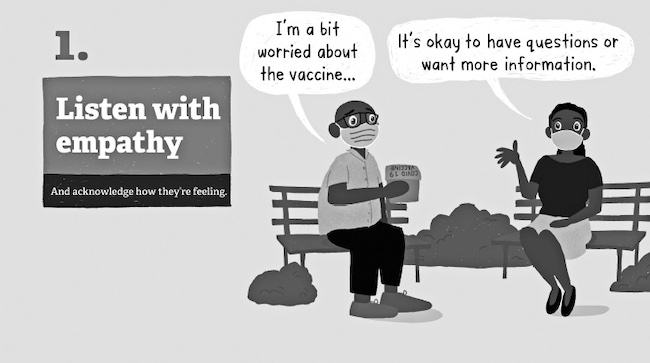
Perry: I think the book offers a very clear roadmap, by providing three core takeaways, One: We need deeper cross-sector collaboration/ Two: We need models of behavior that reflect human reality. Three: We need a medical and public health system that sees and responds to the full complexity of the people it serves. Let me elaborate on those takeaways:
First, it makes the case that public health cannot operate in isolation. Government has to work with public health, public health has to work with medicine, and all of them need to be in active partnership with business and industry. Everyone has to be at the table if we are serious about solving complex health problems.
A very concrete example comes from the COVID-19 vaccine rollout in New York City. Many of us remember that the appointment system crashed within an hour. That was not a failure of science. That was a failure of coordination. If we had people who build high-demand platforms every day, that likely would not have happened. So the question becomes: Why are we not consistently working with people who know how to solve these kinds of problems better than we do? Public health has to be more collaborative and far less siloed.
Second, the book challenges one of the dominant assumptions in our field, which is that human beings make rational decisions. Much of public health has been built on cognitive models that assume if we give people the right information, or increase their confidence, they will behave accordingly. But that is only part of the story.
And third, there is a very important message for medicine: We have to treat the person, not just the disease. Every patient is living within a complex set of realities. They may be a parent, a caregiver, an immigrant, someone navigating economic hardship, someone holding multiple racial, ethnic, or cultural identities. All of those factors shape how they experience illness and how they engage with care. If we want better outcomes, we have to meet people where they are and as who they are. This is why I also dedicated the book to my brother Tony, whose life with Progressive MS was made even more complicated when he contracted COVID and experienced a retinal vascular occlusion (eye stroke).
LGBTQCommunityNews: “Humanizing Public Health” as a sea change in attitude is a worthy, necessary, and heavy, heavy lift! What are the “actionable” changes in policies, practices, and attitudes you hope this work will inspire, or compel, in others?
Perry: Let me be very direct: Public health needs to be at the table—not waiting to be invited, but insisting on our place. That starts with rethinking how we are educating our students, including how we prepare them to communicate in the world we actually live in and how to challenge misinformation in a humane way, not just with statistics as I an my colleagues will be discussing at an upcoming webinar hosted by the Association of Schools and Programs of Public Health. That means taking full advantage of social media and understanding its power.
I was recently saying to a colleague that we should be creating public health influencers. Why aren’t we doing that? We have people influencing millions on makeup, fashion, and design. Important in their own ways, but not exactly life and death. Public health is. So why are we not equipping our students and our professionals to shape narratives, to communicate clearly, and to influence behavior at scale? That is an actionable shift we can make right now.
The same applies to researchers. We have to get out from behind our desks. Public health cannot be practiced solely through papers, policy briefs, and conference presentations. We need to be out in the world, listening to people, understanding their realities, and building trust.
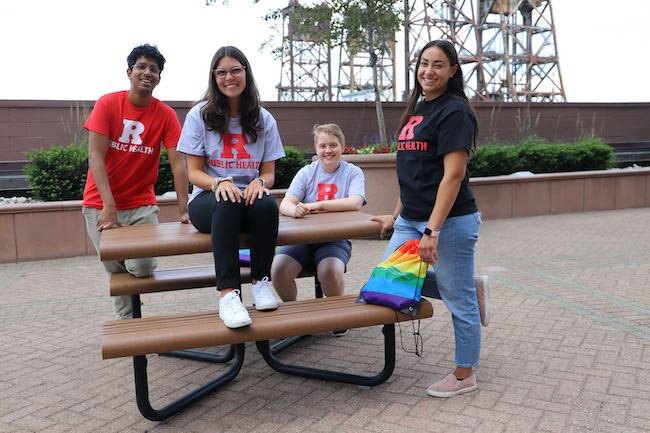
 This is something I am particularly proud of in the work we have done at the Rutgers School of Public Health. Over the past nine years, alongside my colleagues, we have pushed the idea that public health is an action discipline, not something that happens only in offices or through carefully worded statements. It is something that happens in real time, with real people, in real contexts.
A good example is the sugary drink initiative proposed during the Bloomberg administration in New York City. It ultimately failed, and part of the reason is that it did not fully grapple with why families were turning to these beverages in the first place. For many, these drinks were affordable, accessible, and part of their daily reality. When we ignore those underlying conditions, we create policies that feel out of touch and, frankly, unworkable. It’s also why tobacco policies such as countering menthol cigarettes fall short–decisions are made without understanding the multiple reasons people are drawn to menthol cigarettes.
This is exactly where public health needs to do better. We have to understand the full context of people’s lives. Not just their behaviors, but the structural, economic, and cultural forces shaping those behaviors. And then we take that knowledge back to government; to industry; to medicine. Because medicine alone is not going to do this work. It is not designed to. This is where public health must lead. That, to me, is the actionable change. We step forward, we engage, and we lead.
LGBTQCommunityNews: Talk about the “humanizing” concept as you hope it might be adopted to matters outside of a pandemic; and what about pandemics inspired it as the focus of the book’s “humanizing” quest?
Perry: “Humanizing,” as I use the term in this book, cuts many ways. It means understanding the whole human being, not just a diagnosis or a risk factor. It means showing humanity toward one another, especially in moments of fear, uncertainty, and disagreement. It means keeping people, not diseases, at the center of both prevention and care. And it means recognizing that public health and medicine are ultimately about human lives, not just biological processes.
At its core, humanizing is about meeting people where they are. It is about being a human being first, whether you are a public health professional, a physician, or a nurse, and then engaging with others in ways that are real, respectful, and effective.
That, to me, is what a humanistic approach looks like. It is not about abandoning science. It is about delivering science through connection, empathy, and an understanding of what actually motivates people. Because in the end, people do not change behavior because they are told to. They change because something speaks to who they are and what they value.
LGBTQCommunityNews: And when was that writing process? Did it differ from other things you’ve written?
Perry: I have written several books now, both edited and solo authored—and one thing I can say with certainty is that it is inherently solitary. It is me, sitting with my thoughts, often in my own head for long stretches of time. It is not always easy. In fact, it is often difficult.
That said, I never begin a book unless there is real passion behind it. And with this one, that passion built over time, especially during COVID. I think if you read Humanizing Public Health: How Disease-Centered Approaches Have Failed Us, you can feel that energy throughout. It is not a detached or purely academic exercise. My voice, my experiences, and my perspective are part of the narrative.
From that initial spark to the completed manuscript, the process took about a year. But writing is never linear. You start with an idea, and then it evolves. You follow it, sometimes not entirely sure where it is going to take you. There are entire sections I write that never make it into the final book. They are meandering, or they no longer serve the core argument. And then, every so often, there are these moments, these small kernels of clarity or even brilliance, that become the anchors of the work. That is the rhythm of how I write.
In terms of process, I immerse myself completely. I read the scientific literature, follow public discourse, pay attention to social media—but I also take inspiration from film, music, television, and art. Those influences shape how I think, how I communicate, and how I connect ideas. I draw on them throughout my writing because, ultimately, everything in the world is multidisciplinary and interdisciplinary. Public health does not exist in a vacuum, and neither should the way we write about it.
LGBTQCommunityNews: Did you consult with others during the process and, if so, were there elements we see in the final version where feedback caused you to alter course or dig in?
Perry: I do rely on friends and colleagues along the way, but not in a formal sense. I bounce ideas off them to see if something makes sense, if it resonates, or if it feels illogical or even a bit too far out there. But if I am being honest, I am often pushing in new directions. I often joke that I have never been very good at coloring inside the lines, and I have evidence of that from childhood. My coloring books were a mess. Nothing stayed where it was supposed to. And in many ways, that has carried into my professional life. I do not want my work, or my books, to simply reinforce what we already know. I want them to push, to provoke, to offer something different.
That is also how I think about public health more broadly. When I first arrived at Rutgers School of Public Health after about 20 years at New York University, I was asked by a reporter which school of public health I wanted ours to emulate. My answer was simple: None of them.
Over the past nine years, working with extraordinary colleagues, we have built something that is both grounded and different. Yes, we offer the core, traditional training that any strong school of public health should provide. But we have also pushed into areas that many others have been slower to embrace. We developed the first LGBTQ-focused concentration.
We have built programs in sexual and reproductive health. We talk openly about activism. And we do not shy away from confronting power, including when that means standing up to harmful policies at the federal level.
That willingness to lead and sometimes disrupt, is exactly what I bring to my writing. So when I talk to colleagues during the writing process, it is not just about refining an argument. It is about testing how far that argument can go; whether it pushes us to think differently. Because if it does not, then I am not sure it is worth writing.
LGBTQCommunityNews: How do you pace yourself? Structured mental health or mind-clearing breaks? Play it by ear? And when you’re not fully focused on that project. what are you doing to recharge?
Perry: When I am not writing, I try, at least in theory, to step away and recharge. Sometimes that means spending time with friends, sometimes it is simply allowing myself to disconnect for a few hours. I will admit, I am not always great at that. The ideas tend to follow me. But those moments of stepping back are important, because they allow the work to breathe, and often that is when the next insight arrives.
I have said before that I thought my previous book would be my last. I am tempted to say that again now. But frankly, there is already another idea quietly forming, one I have been discussing with colleagues and friends. So we will see.
LGBTQCommunityNews: Okay, now for the pop culture lighting round. Who are your Icons for the Ages, from film to literature to television, to music, and more? What are you watching, be it network, streaming, social media, etc.? Favorite Golden Girl, and why?
Perry: I love these pop culture questions, probably more than I should. There is actually a running joke among my leadership team at the Rutgers School of Public Health that I always end meetings with recommendations. Music to listen to, films to watch, things to stream, books to read. It is one of my favorite things to do. And in some ways, it is very much aligned with everything I have been saying about humanizing. It connects us. It reminds us that we are people first. This idea that academics have to be these detached, almost performative intellectuals, has done real damage to higher education.
We have, at times, forgotten the human element, and people feel that. And that is a criticism higher education deserves more broadly—its disconnectedness and its inability, at times, to reach real people in their real lives, with their real realities and their real concerns. In many ways, that brings me full circle to what this book is all about.
Now, to your questions.
My icon for the ages is Kate Bush. No question. From her very first album to today, she has been a constant source of inspiration for me. I was thrilled that a new generation discovered her through Stranger Things. For me, she is not just an artist. She is a muse. Her music is part of how I think and feel.
In terms of film, it is The Godfather and The Godfather Part II. I still go back and forth on which one I think is better. Both are extraordinary. We will not talk about Part III. That was a missed opportunity.
For The Golden Girls, I would say I relate most to Dorothy. Her directness and her perspective resonates, and I relate just as much to Suzanne Sugarbaker from Designing Women. That sharpness, that presence, that ability to command a room.
As a young gay man coming of age in the late 1970s, Charlie’s Angels was also formative. I still have the original dolls displayed in my home. And without hesitation, my Angel was Kelly, played by Jaclyn Smith.
More recently, I am a huge fan of Timothée Chalamet. I think he is exceptionally talented. And I actually agreed with him when he spoke about opera and how disconnected many people feel from it. He got a lot of criticism for that, but I thought he was simply being honest. Sometimes we need to hear that.
In terms of what I am watching now, I am really enjoying Bad Criminals. It is sharp, it is smart, and it is engaging in a way that feels fresh. As for recent films, my favorite from last year was Marty Supreme. I thought it was genuinely brilliant. I also found Hamnet incredibly powerful, though emotionally difficult to watch. Frankenstein, for me, was visually striking, even if it did not completely pull me in.
And I will say this, I recently saw Wuthering Heights, and I know I am probably supposed to dislike it. But I did not. I actually loved it. What it captured, in my view, was the emotional intensity and the sheer insanity of [the novel] Wuthering Heights. And I have to say, I was completely mesmerized by the soundtrack by Charli XCX. It is bold, it is unexpected, and frankly, it is very hot. For me, that combination of emotional truth and creative risk made the film work. It mattered more than strict adherence to every detail of the original text.
So yes, those are my icons. And maybe more importantly, those are the things that keep me grounded, connected, and, in many ways, human.
LGBTQCommunityNews: Say you’ve successfully changed hearts and minds in the manner you hope to (or at least have the things you advocate for factor into the work of others). After that success, what’s next? Seriously, are there new written works in the planning?
Perry: Have I changed hearts and minds? I do not know if I can answer that in a traditional sense. What I can say is this: I have tried to live my life, and conduct my work, in a way that is fully visible and fully honest. I am an openly gay man. I lead with my identity. I do not hide who I am, and I never have. And I think that, in and of itself, has mattered. I hear from younger scholars, from students, from people coming into the field, that seeing someone who is both unapologetically himself and professionally successful has been meaningful to them. If that has helped even a few people feel that they can be who they are and still achieve what they want to achieve, then that is something I am proud of.
I am also an HIV-positive gay man. I have lived with this disease for four decades. I came of age in the worst years of the epidemic, when we were losing far too many people, including my partner, Robert Massa, who was the first AIDS editor at the Village Voice. Those were years defined by fear, by grief, and by extraordinary loss. And yet, I have been able to build a life grounded in humanity, in purpose, and in respect, even in the face of those experiences.
So when I think about whether I have changed hearts and minds, I come back to something simpler. Maybe it is not just about what I have written or said. Maybe it is about how I have lived. About continuing, despite everything, to show up, to do the work, to believe that things can improve, and to hold onto the hope that one day we will bring this epidemic, and others like it, to an end.
If being that person, if living that life openly and honestly, has shifted even a few perspectives or opened even a few minds, then I think that is where the real impact lies.
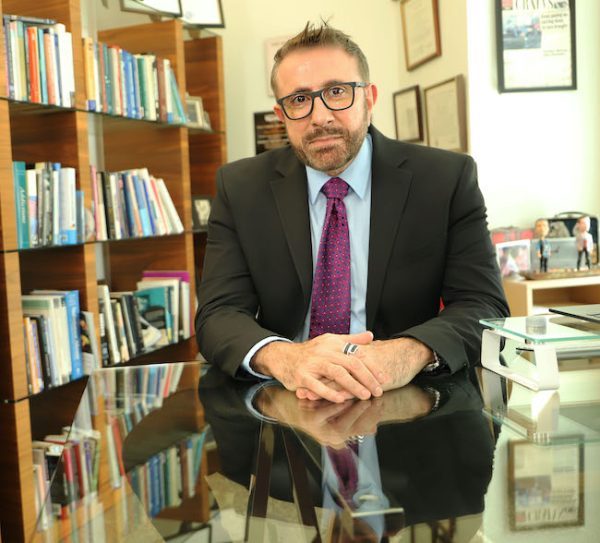 Perry N. Halkitis, PhD, MS, MPH, is dean, distinguished professor, and Hunterdon Professor of Public Health and Health Equity at the School of Public Health at Rutgers University. He is the author of the new book Humanizing Public Health: How Disease-Centered Approaches Have Failed Us, is now available in paperback and ebook formats from Johns Hopkins University Press. To purchase the book with a savings of 30%, click here and, at checkout, use the code HTWN.
—END—
LGBTQCommunityNews.nyc is an independent, free source of queer-centric news, arts, info, and opinion content. Our website, podcast, and quarterly newspaper are funded by advertising revenue and reader donations. To support this project, click here for the GoFundMe campaign. Questions? Comments? Click here to contact us. To join the subscriber list of our free ENewsletter, click here.